
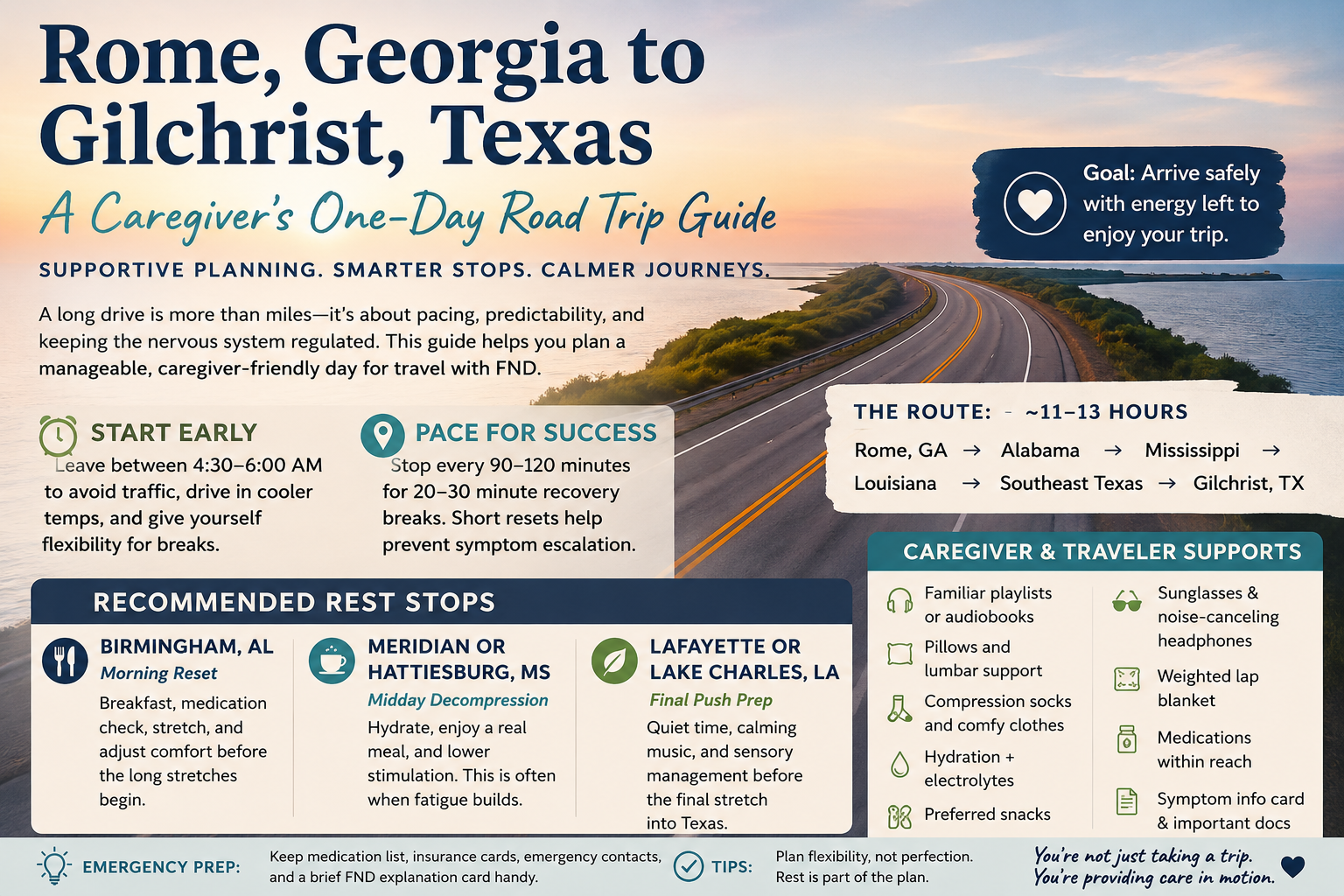
Planning a long road trip with Functional Neurological Disorder (FND) requires a different approach than a typical vacation drive.
The route from Rome, Georgia to Gilchrist, Texas is manageable in one day — usually around 11 to 13 hours depending on traffic and stops — but the key to a smoother trip is planning for regulation and recovery, not just arrival time.
For caregivers and families supporting someone with FND, thoughtful preparation can help reduce stress, protect energy levels, and create a calmer experience for everyone involved.
Start with Realistic Expectations
A successful travel day is not measured by how quickly the destination is reached.
Instead, focus on:
- maintaining manageable energy levels
- reducing sensory overload
- preventing symptom escalation
- allowing flexibility throughout the day
Symptoms associated with FND can sometimes increase with:
- fatigue
- prolonged sitting
- overstimulation
- stress
- heat
- disrupted routines
- poor sleep
Building a plan around those realities often leads to a much smoother travel experience.
Leave Early to Create Flexibility
For a drive this long, an early departure is one of the most helpful planning strategies.
A departure window between 4:30–6:00 AM can help:
- avoid heavy traffic
- maximize daylight driving
- reduce time pressure later in the day
- create flexibility for additional breaks if needed
- support calmer nervous system regulation early in the trip
Starting the day before roads become busy can also create a quieter, lower-stimulation environment during the first several hours of travel.
Plan Breaks Before They’re Needed
One of the most effective ways to support travelers with FND is planning regular recovery stops before symptoms become overwhelming.
A helpful pacing strategy is:
- drive for 90–120 minutes
- stop for 20–30 minutes
- allow time for rest and regulation before continuing
During breaks, focus on:
- hydration
- stretching or walking
- medication timing
- restroom access
- cooling down indoors
- reducing sensory stimulation
- changing seating positions
These pauses are an important part of the care plan — not interruptions to the trip.
Suggested Stop Areas Along the Route
Birmingham, Alabama
A good first longer stop for:
- breakfast
- medication checks
- stretching
- adjusting comfort supports
- early symptom check-ins
Meridian or Hattiesburg, Mississippi
Helpful for:
- a sit-down lunch
- hydration
- cooling down
- sensory decompression
- monitoring fatigue buildup
Lafayette or Lake Charles, Louisiana
A useful stop before the final push into Texas.
This is often a good time to:
- lower stimulation
- simplify conversation
- reset mentally and physically
- prepare for the final coastal stretch
Create a Comfort & Regulation Kit
Long drives can create physical and sensory strain, especially for travelers with neurological conditions.
Helpful items may include:
- medications within easy reach
- electrolyte drinks
- familiar snacks
- supportive pillows
- compression socks
- weighted lap blankets
- sunglasses
- cooling towels
- noise-canceling headphones
- extra clothing
- printed travel schedules or visual timelines
If mobility symptoms fluctuate, consider bringing:
- mobility aids
- folding wheelchairs
- seat cushions
- slip-on shoes
Even items that are only occasionally needed can become extremely valuable during a long travel day.
Prepare Calmly for Emergencies
Preparing in advance can help reduce stress and improve confidence during travel.
Helpful items to keep accessible:
- insurance cards
- medication lists
- emergency contacts
- physician information
- symptom summaries
Some families also carry a brief explanation card for public situations or medical encounters:
“This traveler has Functional Neurological Disorder (FND). Symptoms may include tremors, weakness, dizziness, speech difficulty, or seizure-like episodes.”
Having important information readily available can make unexpected situations feel more manageable.
Don’t Forget Caregiver Support
Caregivers often spend long travel days managing navigation, timing, symptoms, emotional regulation, and logistics simultaneously.
To help prevent burnout during the drive:
- stay hydrated
- eat regular meals
- take short walks during stops
- allow quiet moments
- avoid overscheduling arrival day activities
- build flexibility into the timeline
Supporting the caregiver’s energy level is part of supporting the traveler, too.
Planning for Arrival in Gilchrist, Texas
Gilchrist sits along the Bolivar Peninsula on the Texas Gulf Coast, and the final stretch of the drive may feel tiring after a full day on the road.
A few helpful considerations:
- coastal weather can change quickly
- humidity and heat may increase fatigue
- ferry traffic near Port Bolivar may create delays
- dark coastal roads can feel more draining at the end of the day
When possible, keep the first evening simple:
- hydrate
- eat an easy meal
- unpack slowly
- allow time to decompress
- prioritize rest
A calm arrival often helps the rest of the trip begin more smoothly.
Final Thoughts
Traveling long distances with Functional Neurological Disorder requires flexibility, preparation, and realistic pacing.
The most successful travel days are usually the ones that leave room for:
- breaks without guilt
- changing plans if needed
- emotional regulation
- physical recovery
- slower moments throughout the day
With thoughtful planning and supportive pacing, a one-day drive from Rome, Georgia to Gilchrist, Texas can feel far more manageable — and allow everyone to arrive with energy left to enjoy the destination.
Leave a Reply